The Last Post

I invited the people of Denmark to send me a letter!

I’ve made a new work to commemorate the end of the Danish Postal Service –  PostNord stopped delivering letters at the end of December 2025.
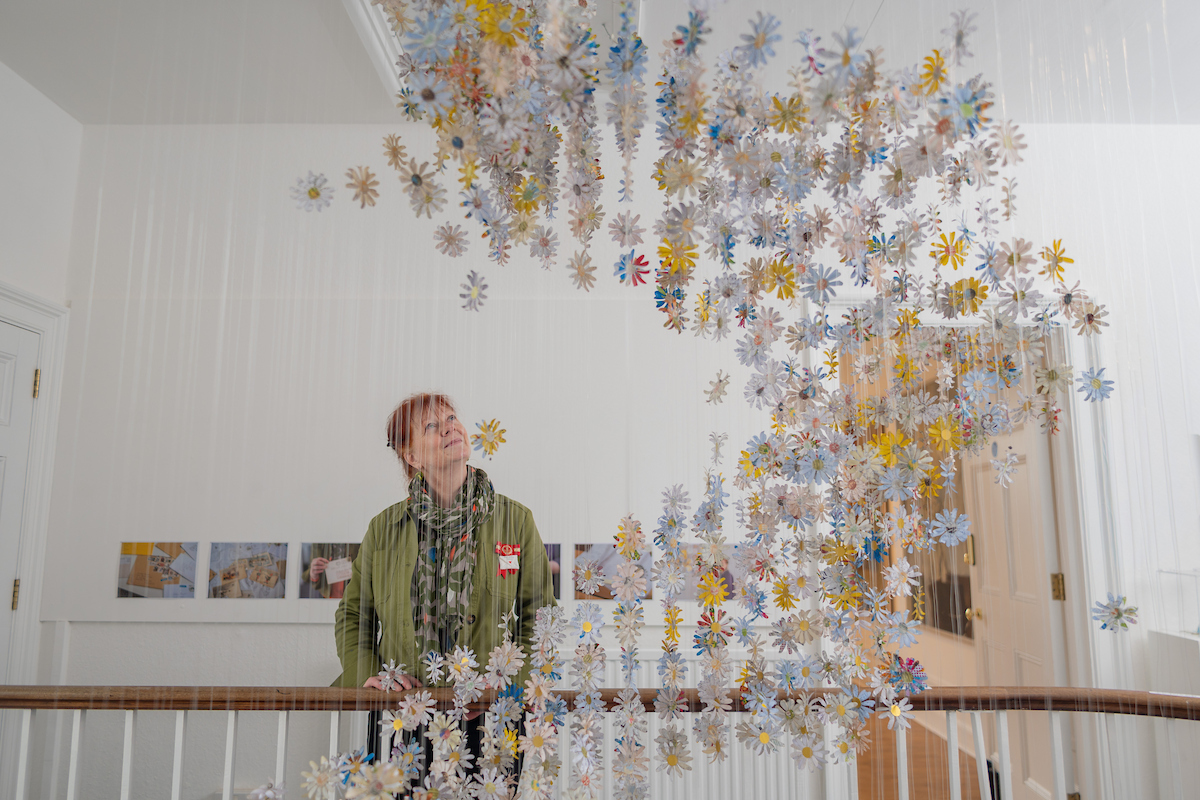
The way we communicate has changed so much over the years. The Second World War love letters that I have used in my work are beautifully composed expressions of affection written by ordinary people. We just don’t express ourselves in writing like this in the same way now. I love receiving a handwritten letter or card but it doesn’t happen nearly so often as it used to.

PostNord ending their delivery of letters and removing the post boxes feels like such a significant moment that I wanted to mark it by creating some art.
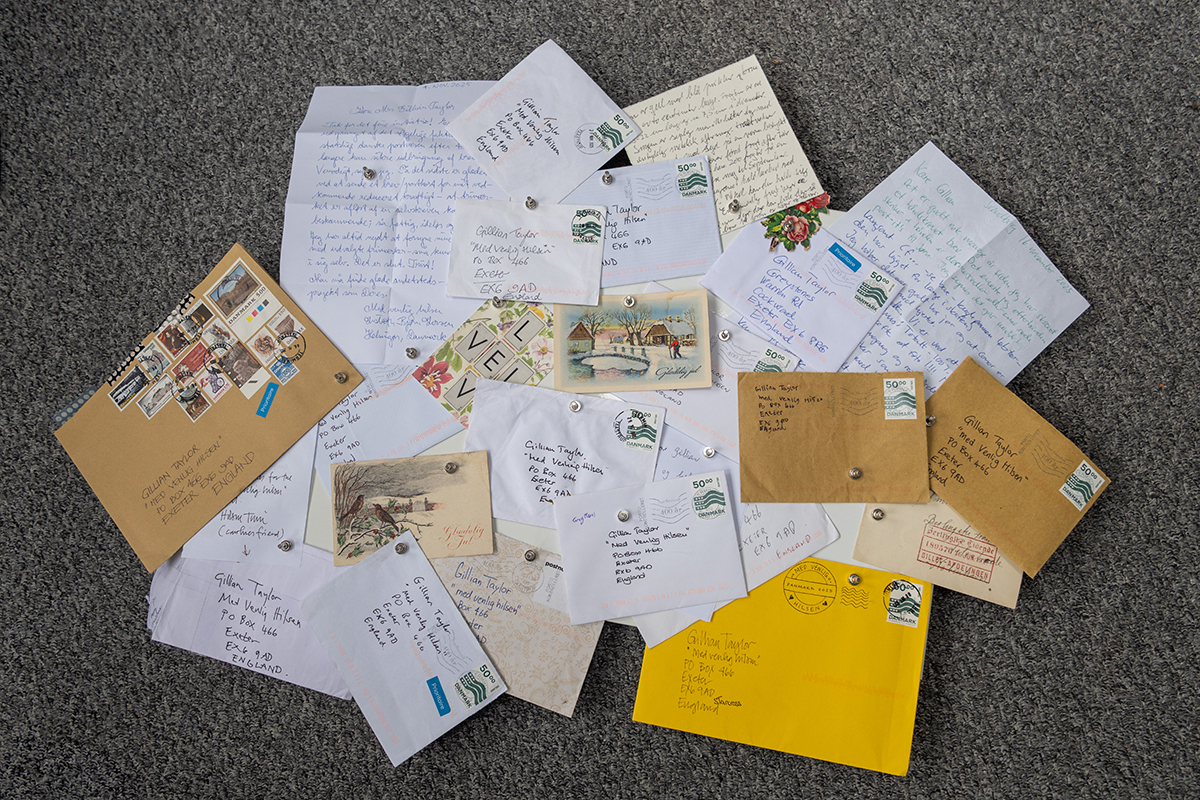
I invited the people of Denmark to write to me (in Danish or English) before the final collection from post boxes by PostNord on 30 December. I received letters from people expressing their sadness at the end of the postal service, sharing memories of letters they’d received, and including postcards and pictures.

An accompanying soundscape has been specially composed by Laura Reid and uses a French horn, taking inspiration from the post horn which appeared on Denmark’s post boxes. When the postal service began, the post horn would be sounded to announce the arrival of the letters. Voices reading the letters’ text are layered over the music.

‘The Last Post’ is at Thelma Hulbert Gallery, Honiton, Devon, England from 16 May until 27 June 2026.

Read the article in The Guardian

Read the BBC coverage

Listen to the coverage on BBC Global
(scroll forward to 22 minutes)
IAPMA Biennale

I have a piece of work in The International Association of Hand Papermakers & Paper Artists (IAPMA) Biennale in Silkeborg, Denmark from 7 February to 25 May 2026. 

The Biennale invited artists to explore paper as a living palimpsest — a material that absorbs and preserves the layered traces of life.

Impressions of Nature: Paper as Memory

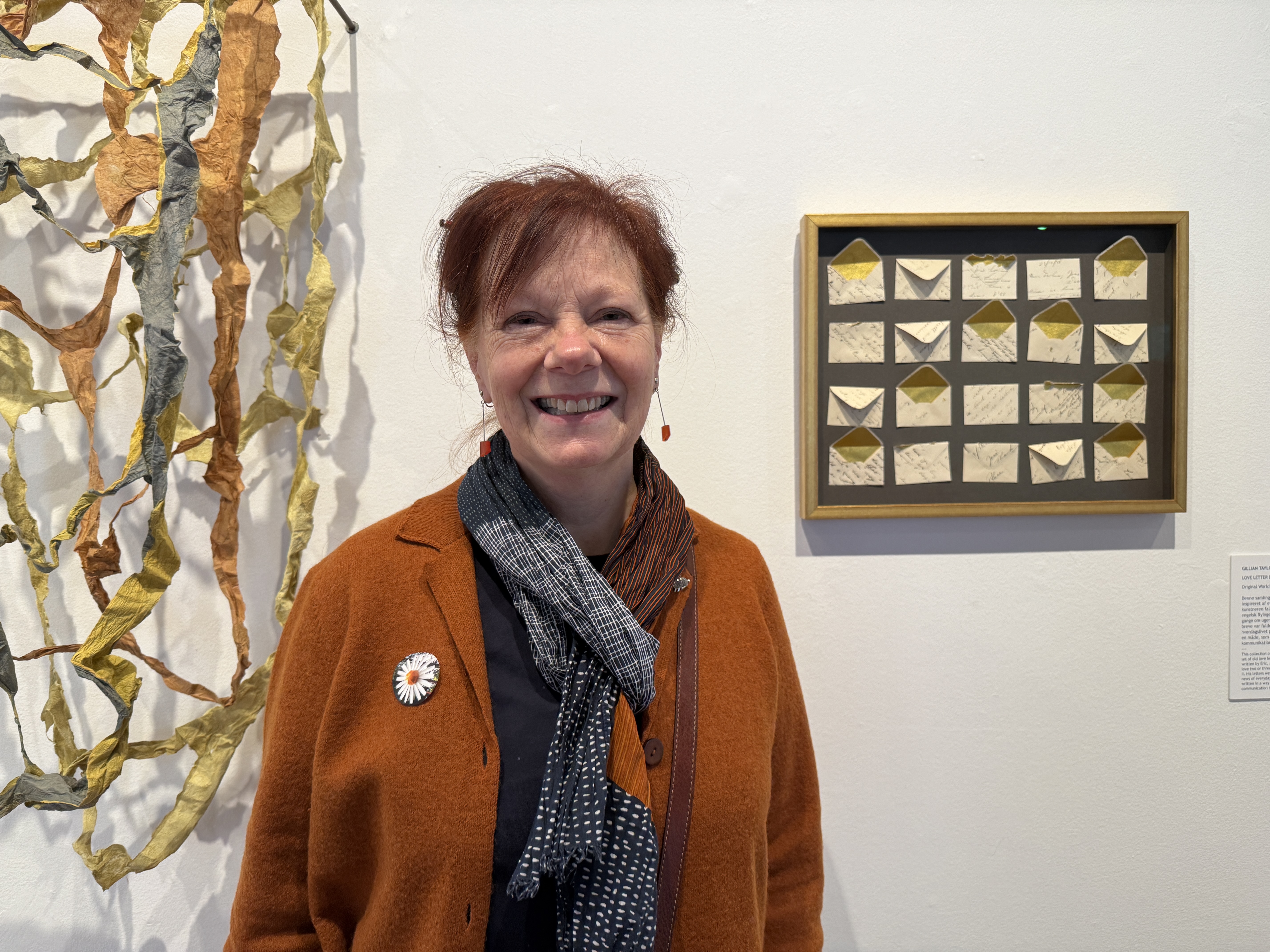
My work in the exhibition is a collection of tiny handmade envelopes inspired by a set of old love letters . They were written by Eric, an English aircraft engineer who wrote to his love two or three times a week for five years during World War II. His letters were full of messages of love interspersed with news of everyday life at the time. These letters are beautifully written in a way that we don’t often see now as our communication becomes increasingly digital.

The Coolest Colour

Why is the sky blue? Are blueberries really blue? Why is the Virgin Mary depicted wearing blue?

In an exhibition at Powderham Castle, Devon, I worked with artist and friend Jane Perkins to create an exhibition inspired by one special colour.

The collaboration is inspired by my daily pictures of the sky and Jane’s desire to create a large-scale installation of a bowerbird’s bower, decorated with blue objects to attract a mate. We took inspiration from the Castle, its objects and its own special shade of Powderham Blue.

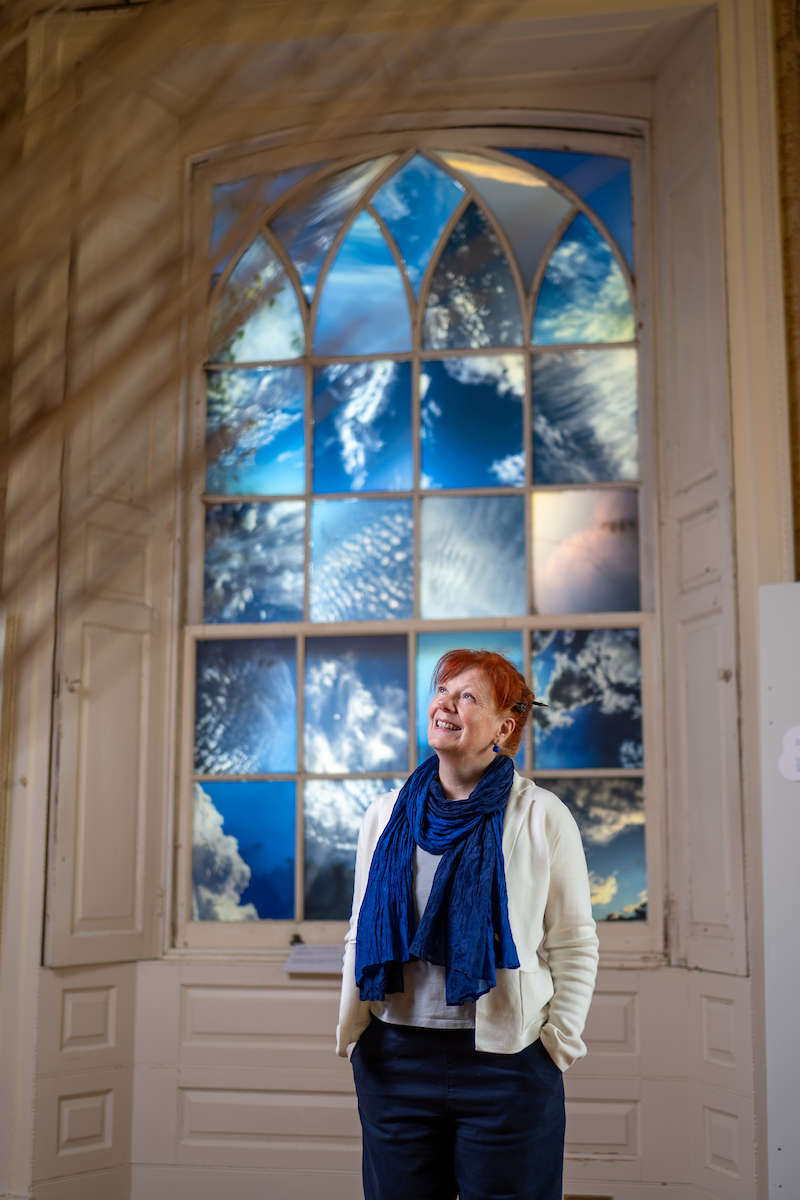
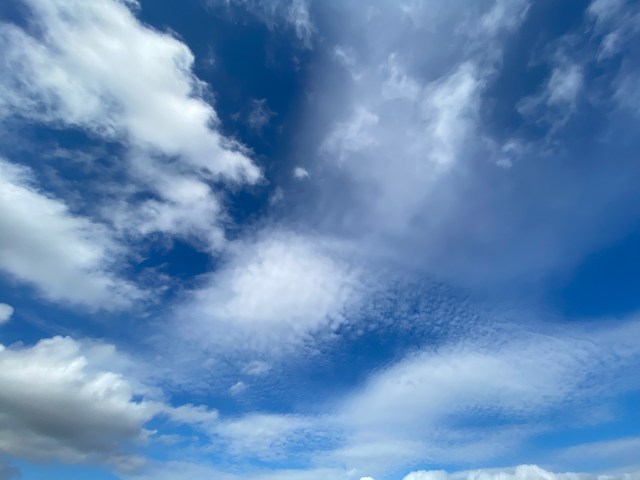
As well as being a paper artist I also enjoy taking photos, and I’ve photographed the sky every day since the first day of lockdown in March 2020.

The sky pictures covered one of the Castle windows, and the exhibition also included Love Letter Envelopes made with pale blue writing paper, and Viking boats made with sea navigation charts.

The Art and Soul of Paper

Japanese Anemones paper art

Some of my Japanese Anemones will be shown as part of The Art and Soul of Paper, an exhibition of 21st century paper artworks to embody the essence of the Japanese papermaking heritage.

The event takes place in Norwich from 11 March to 20 April and includes three paper exhibitions, two artist talks and a workshop in Papermaking from Plants.

It is organised by The International Association of Hand Papermakers and Paper Artists to coincide with Washi: the Art of Japanese Papermaking, a symposium hosted by Norwich University College of the Arts.

My work will be exhibited at Mandells Gallery, Elm Hill, Norwich from 11 March to 6 April.

Japanese Anemones


anemone plus desk

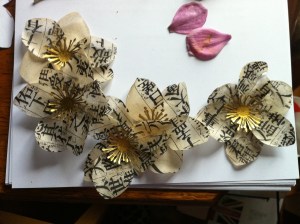
Some time ago, a friend gave me an old Japanese book which had been damaged by insects. She thought it would be something I could use in my work. I kept the book for over a year before I eventually decided what to make with it first. I love the way that Japanese anemones move in the wind and I decided to make something inspired by them, and it suddenly struck me that this old book was the perfect thing to use.

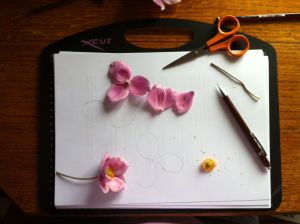
I used one of the flowers  and pulled it apart to see how the petals are formed. Then I made a number of templates so that all the paper flowers would be slightly different. The petals are hand cut and the stamens are laser cut from a hand drawn template.

anemones plus petals

The stamens here are made from gold paper and I’ve also been experimenting with some silver ones.

The final pieces will be framed with polished black frames, hinting at the Japanese style.

Poppies installation

poppies installationThis installation at the Exeter Northcott is made up of a thousand poppies created from copies of love letters written during World War II.

Some of the letters were written by an aircraft engineer in Southampton to his girlfriend, who later became his wife. He wrote to her two or three times a week for over five years.

Another set of letters was written by an American GI to a WREN but their story didn’t have such a happy ending – a telegram from her father suggests his disapproval of the relationship.

Other letters were kindly loaned by local people in response to a request through the local media. During my Devon Open Studios weekend in September, people brought family letters which helped to create the final installation.

I’ve been creating the work in my head for a long time. It’s made in response to the space at the Northcott specially for the month of November, and inspired by these letters which were written at a time of great uncertainty and heightened emotions.

Putting together the piece was a complicated process. Because it’s so tall (2.7 metres), I had to make it horizontally, and because of the shape of the niche where it’s hanging, the only practical way to construct it was upside down. I’d worked out the curve of the spiral in advance and created a plan for each layer, but my ideas remained fluid and I was constantly tweaking and recalculating as the shape developed.

Rosy Seal was artist’s assistant for this project and assembled lots of the poppies. Several people helped with hanging the work, including the tech crew at the Northcott to whom I’m very grateful.

You can see the installation in the foyer at Exeter Northcott Theatre until the end of November 2012.

Theatre programmes

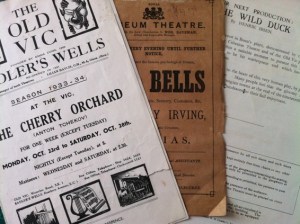
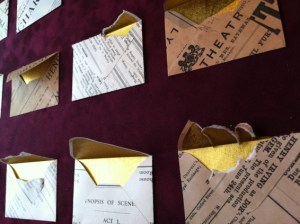
I was commissioned to make a collection of envelopes using these wonderful old theatre programmes. It was an enjoyable challenge selecting the most significant pieces of text from the programmes and then making sure that they were still visible when the envelopes were put together. It takes a surprising amount of paper to make one small envelope.

There were some wonderful details on the programmes, including the lovely corner decorations and illustrations.

I worked closely with the framer to select the mount board which reflects the colour and feel of traditional theatre decor.

Remembrance

poppiesAs November 11th approaches, I’ve been thinking about Eric, an aircraft engineer based in Southampton during World War II. I’m fortunate enough to have Eric’s love letters, which is a great privilege.

Eric wrote to his love two or three times a week for five years with messages of love interspersed with news of everyday life during wartime. The anxiety and uncertainty of the separation make the letters all the more poignant.

I feel very privileged to own the letters which I have now used to make the poppies you see here.

Lasers or scissors?

red paper flowersI’ve just attended an amazing three day course at the University of the West of England, exploring printing and laser cutting paper. Laser cutting involves careful preparation of computer files and is more time consuming than just the process of cutting on the machine. You can, however, cut huge quantities of paper shapes relatively quickly. I will still be using scissors to make envelopes and other work by hand, but the course inspired me to explore different ideas.